 Skip to the content

This edition is out of print.
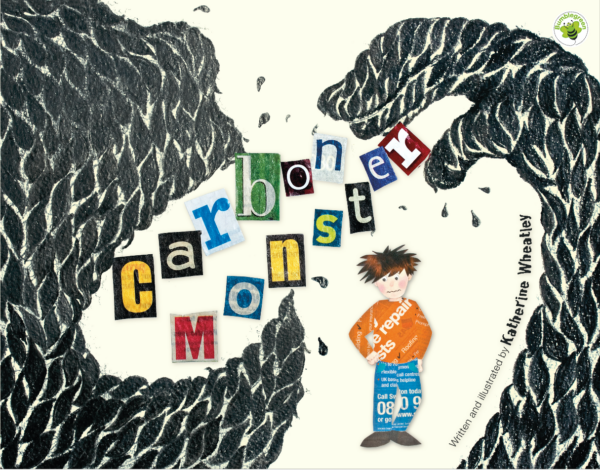
In 2011, when I wrote the simple story “Carbon Monster,” I was an Eco-Schools Co-ordinator, amongst other leadership roles, and as a school we achieved the Green Flag Award for the sustainable practices across the school.
During this period I noticed that there were very few books or resources available for classroom use, particularly those printed sustainably, hence Carbon Monster.
This fictional story was not intended to be scientifically rigorous; instead, it serves as a gateway for further discussion, creativity, and engagement within the simplest concept of waste within the framework of the 3Rs.
Over the years, it has been wonderful to see the fun artwork made from waste materials, children’s RAPs and poetry, research and reimagined stories, as well as reading child-friendly pledges connected to the Rs – all fun, creative and empowering actions for children.
Since then, education and understanding of climate issues have progressed significantly. We now have access to a wealth of real and imagined stories and resources that enhance our curriculum and stimulate meaningful conversations about climate education and sustainability. Experts are now creating child-friendly videos, fact sheets, and other resources, while various organisations and working groups are actively shaping the future of climate education, involving young people in the process and hearing their voices.
We recognise the simple hierarchy that enables us to implement small changes as active local, national, and global citizens who aspire to make a difference. This includes concepts like rethink, refuse, refill, and repurpose additional to our 3Rs. I firmly believe these steps are fundamentally empowering for children and can help prevent climate anxiety or feelings of hopelessness – focusing on sustainability.
By embracing these principles and making small collective changes, we can work towards a more sustainable life and have an impact – it allows children to feel like they are making a difference amidst the noise and chaos.
In recent years, discussions surrounding climate education have shifted considerably. The new policy, “Sustainability and Climate Change: A Strategy for the Education and Children’s Services Systems,” will mark a significant advancement in education, emphasising expertise and training for schools and Climate Leaders.
‘The challenge of climate change is formidable. For children and young people to confront it with determination rather than despair, we must offer them not only the truth but also a sense of hope. Learners need to understand the reality of climate change through knowledge-rich education. They must also have the confidence that they can be agents of change, engaging in hands-on activities and, as they progress, through guidance and programs that allow them to pursue green career pathways in their chosen fields.’
https://www.gov.uk/government/publications/sustainability-and-climate-change-strategy/9317e6ed-6c80-4eb9-be6d-3fcb1f232f3a
Finally, I was overjoyed to read that ‘Kindness’ was voted by children as their favourite word of 2024 – Kindness has many forms and is a worthy word to place at the heart of our communities and how we view and treat each other, our planet, and all that lives within it.
Related Resources
-
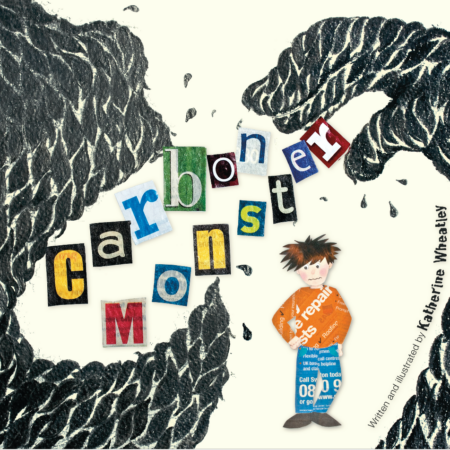
This book is out of print and a new edition is being developed.
Read more -
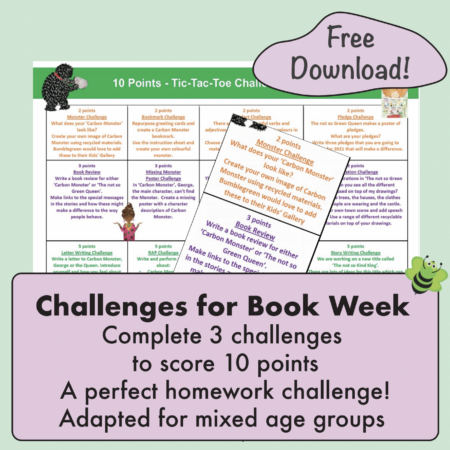
Tic-Tac-Toe (L2L) Challenges for children to complete linked to 2 books
£0.00 Add to basket -
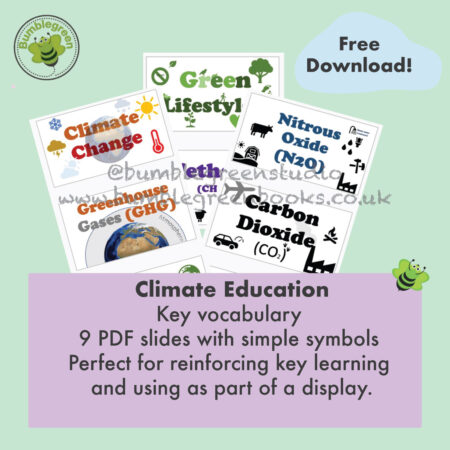
Climate Change Key Vocabulary (KS2)
£0.00 Add to basket -
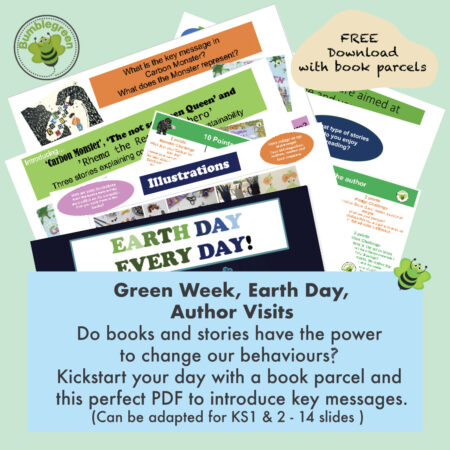
Introduction to the books – Perfect for Green Week, Book Week, Earth Day, English
£0.00 Add to basket -
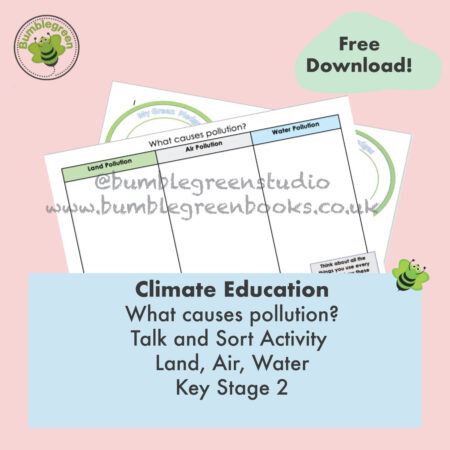
Sort & Talk Activity – Pollution – Land, Sea, Air
£0.00 Add to basket